There is a part of living with a chronic illness that doesn't get talked about nearly enough, the toll it takes on your mental health.
I've scrolled past enough podcasters and wellness influencers to know the narrative by heart. Mindset is everything. Think positively and your body will follow. As if attitude alone can override a neurological disease.
Migraine is invisible. So are mental health struggles. And when you're living at the intersection of both, the gap between what people expect from you and what you're actually surviving can feel enormous.
Someone might be laughing on the outside while internally bargaining with their own brain, How long is this attack going to last? Is this medication ever going to work? What's the cost of missing another day?
Migraine doesn't just hurt, it is exhausting. It forces you to fight a battle no one else can see, while still being expected to show up, perform, and keep going.
Not long ago, migraine disease came up on a popular mental health podcast hosted by Mel Robbins, featuring Dr. Alia Crum. Migraine was discussed through the familiar lens of mindset and positivity.
Now, is Mel Robbins an expert in migraine disease? No. Is Dr. Alia Crum a migraine specialist? No. But the underlying message was familiar, and frustrating: just think more positively.
If positive thinking cured migraine, none of us would still be here.
Migraine is the second leading cause of global disability worldwide. People with migraine are two to ten times more likely to experience anxiety and depression. That isn't a coincidence, and it isn't a mindset problem.
So why does migraine so deeply impact mental health, and why is mindset alone not the answer? Let's talk about it.
Why Migraine and Mental Health Are So Closely Linked
Before we get into coping tools or strategies, something needs to be said clearly: migraine doesn't happen because someone isn't thinking positively enough.
Migraine is a neurological disease. It involves changes in brain chemistry, altered pain processing, and a nervous system that is more sensitive to stimulation and stress than average. Many of the same systems involved in migraine are also involved in mood regulation, serotonin, dopamine, how the brain responds to threat and uncertainty.
When your brain is already wired to be more reactive to light, sound, hormones, sleep changes, and stress, it doesn't just affect pain. It affects how safe your body feels. And when the nervous system doesn't feel safe, anxiety and depression are far more likely to follow.
This is one reason people with migraine are two to ten times more likely to experience anxiety or depression compared to the general population. Migraine brains live under constant neurological strain.
How Anxiety and Depression Take Root in Migraine
When your nervous system lives in a near constant state of alert, anxiety and depression often become familiar companions.
It can sound like: How long is this attack going to last? Why don't medications ever work for me? Is my life always going to look like this?
Your body isn't just fighting physically, it's fighting mentally. And it's incredibly hard to live with a disease where you can do everything right and still have no control.
When I was 23, I experienced one of the darkest periods of my life. I was battling severe depression and suicidal thoughts.
Because more than 50 medications had failed me. I was on headache specialist number six and every day felt like ten steps backward. I couldn't see a light at the end of the tunnel because, genuinely, it didn't feel like there was one.
I felt alone. I felt like a burden. I felt like a failure. I felt an overwhelming, suffocating level of hopelessness.
Did I logically understand that it wasn't my fault? Yes. But logic doesn't matter much to a brain that is suffering.
Around that same time, I was also diagnosed with Pure OCD, a form of OCD driven by intrusive thoughts rather than visible compulsions. If living with OCD has taught me anything, it's that logic doesn't always exist when your brain is in distress.
I knew I wasn't a failure, but that didn't stop me from feeling like one.
Two things can be true at the same time: acceptance and sadness. I accepted I wasn't going to return to episodic migraine. That didn't mean I wasn't grieving.
When Support Turns Into Harm
Comments like: It could be worse. At least it's not ___. You just have to stay strong.
On the surface, these might sound reassuring. But when you're already struggling, they can land very differently.
Illness is not a competition. Pain doesn't become smaller just because someone else is suffering too.
During one of the hardest periods of my life, a doctor told me: "I have patients who are worse, and they're doing just fine."
I wanted to disappear after that appointment.
From our shop
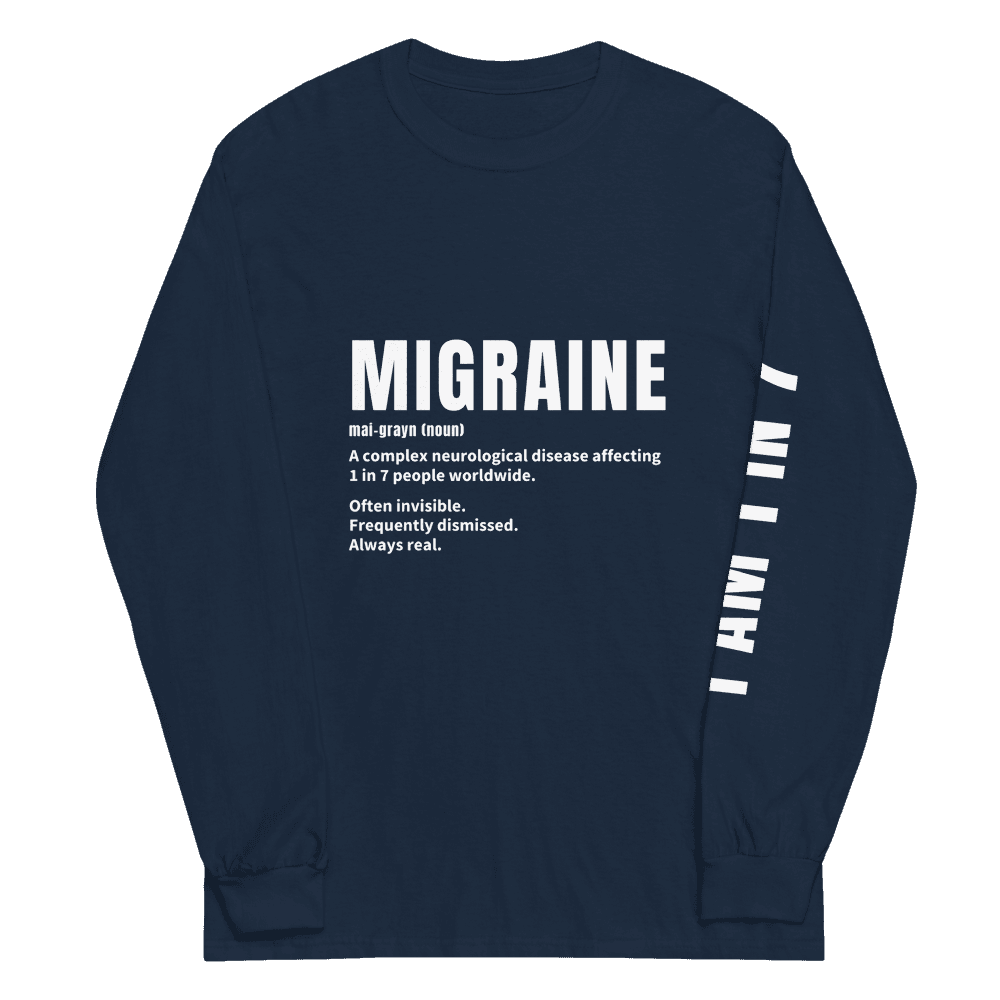
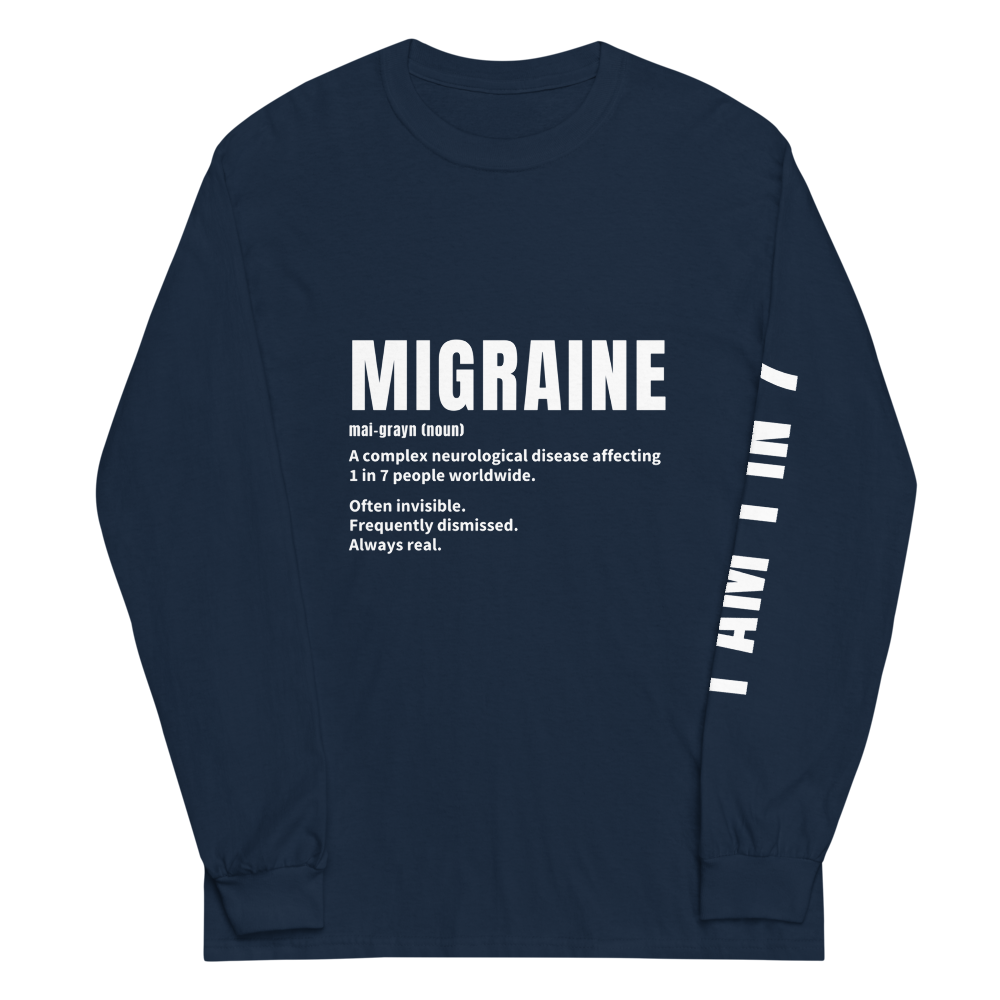
Migraine Definition Sweatshirt
Shop nowDesigned by The Migraine Network 💜
I felt ashamed. Weak. Like a failure who couldn't handle what others seemed to manage fine. Instead of feeling supported, I walked away believing my suffering wasn't valid, that I was somehow managing this disease wrong.
And that belief pushed me deeper into depression.
Living at the Intersection of Migraine and Mental Health
After years of being told what should help, I've learned that real support looks very different from one size fits all advice. I don't believe there is one right way to manage migraine and mental health together. You are the expert on your own body.
What I do believe is this: migraine and mental health deserve equal care and equal priority.
The hard part is that when you're in survival mode, you often have to choose. This still happens to me. There are times I deprioritize mental health management because I'm hanging on by a thread. Weeks later, my OCD spirals. I don't always notice my mental health deteriorating until I'm already overwhelmed, lying on the floor, trying to piece myself back together.
Getting back into a routine while already feeling terrible is one of the hardest things I do. I know it's important. And I also know that when you're running on empty, knowing something matters and actually doing it are two very different things.
What Actually Helps Me Cope
None of my coping mechanisms fix migraine or mental health. They are management tools, things that help me stay afloat in a body and brain that are often unpredictable. What works for me may not work for you. But this is what I keep coming back to.
Therapy
Therapy has been one of the only spaces in my life where I don't have to minimize what I'm carrying. Migraine and OCD feed off uncertainty, and having somewhere to say the scary thoughts out loud, without being judged or rushed, has mattered more than I can explain.
It took me a long time to find the right therapist. I went through several before I found someone I actually felt safe with. I use remote therapy because my bad days are unpredictable, and knowing I don't have to leave the house makes it possible for me to stay consistent. I currently use Grow Therapy, and Talkspace is another option worth looking into.
Journaling
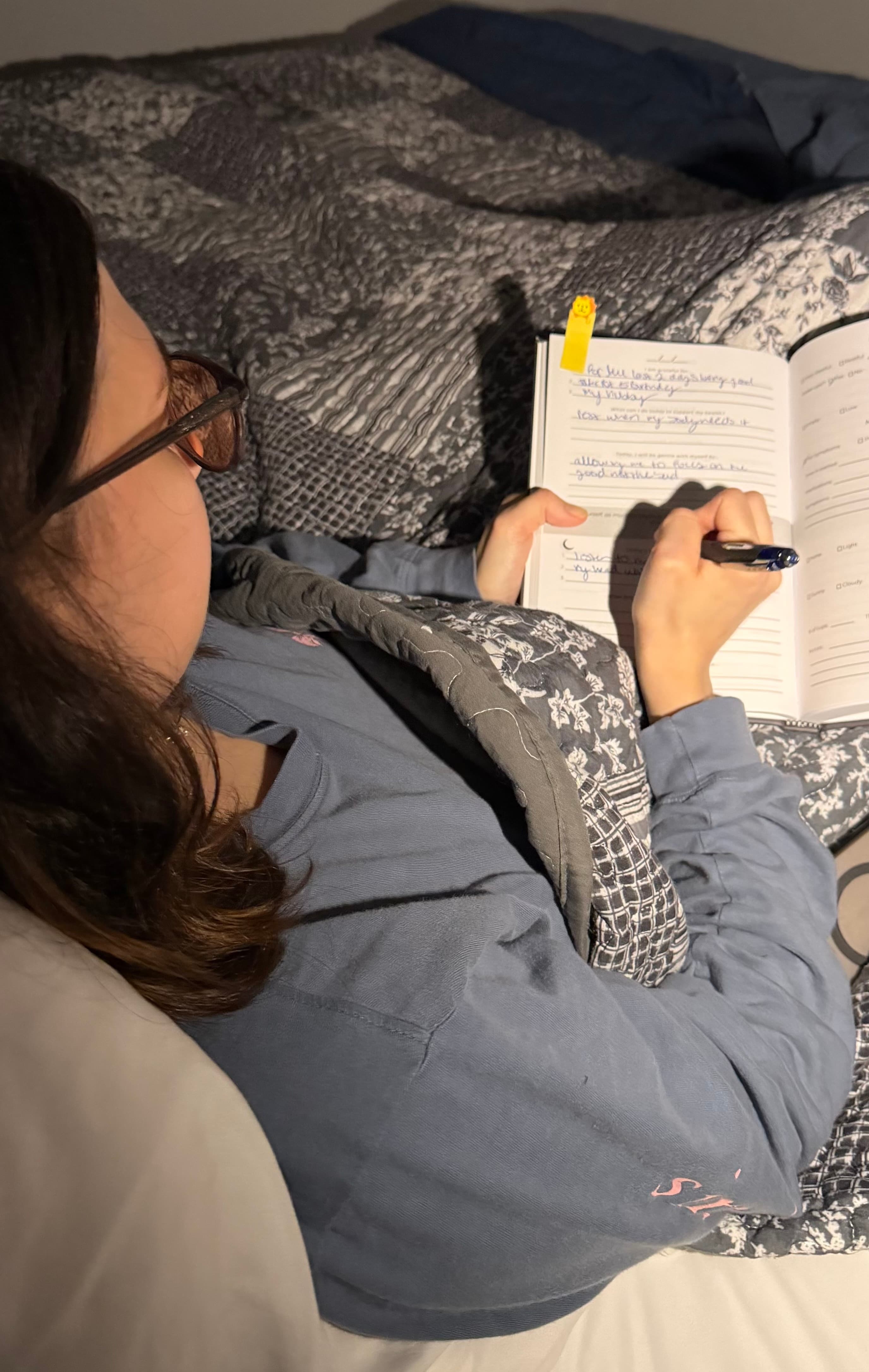
I have a complicated relationship with journaling. Most journals feel unrealistic when you live with chronic illness, too focused on gratitude and positivity, too built around the assumption that you're fixing yourself.
I created my own journal years ago because I needed something honest. Somewhere to track both symptoms and emotions without pretending things were fine when they weren't. For me, journaling isn't about optimism. It's about getting things out of my head so they don't spiral, and tracking patterns I can actually use. You can find my journal here.
Movement
There was a long stretch of my life when exercise was a major migraine trigger. I couldn't just push through, no matter how badly I wanted to.
Movement came back slowly, and it looks completely different now than it once did. It doesn't mean classes or intensity. Some days it's a short walk. Some days it's gentle stretching. Some days it's nothing at all, and that's okay.
From our shop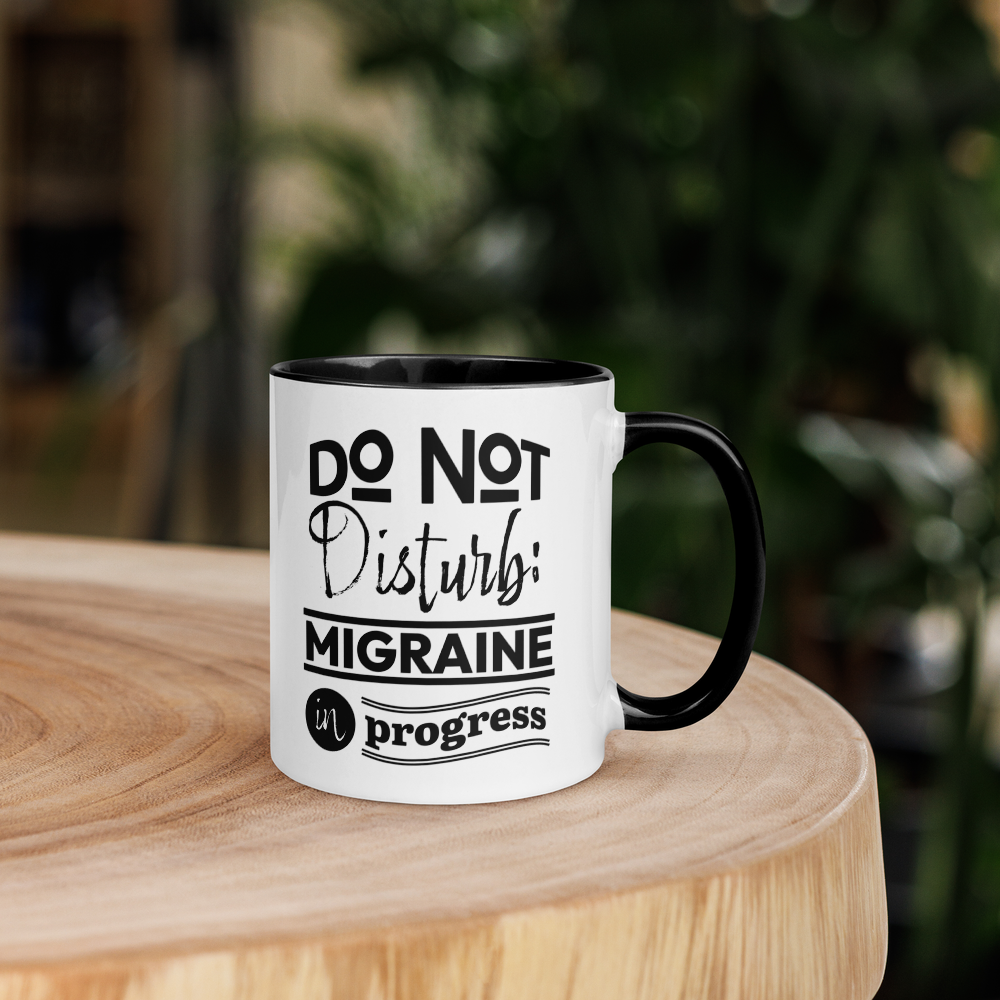
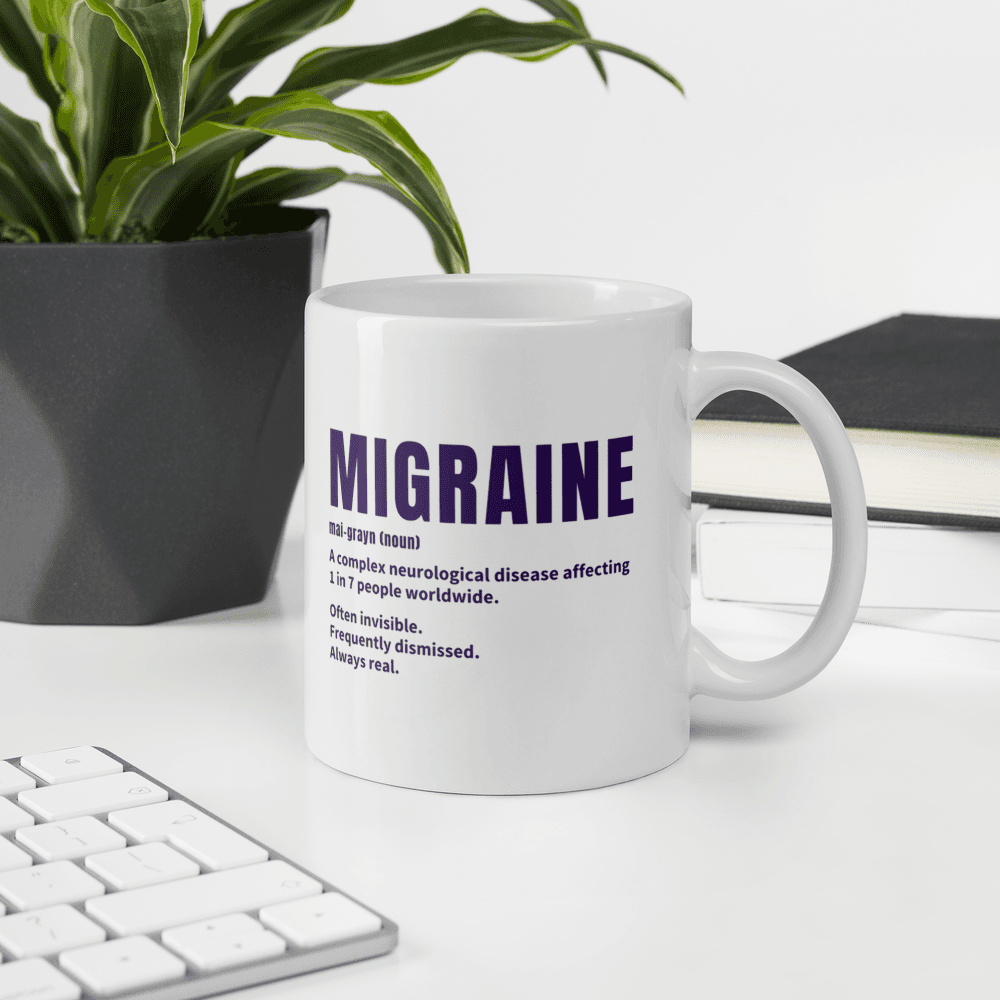
"Do Not Disturb" Migraine Mug
Shop nowDesigned by The Migraine Network 💜
For me, movement is about nervous system regulation, not fitness. A stronger nervous system means I can tolerate more input before an attack hits. To understand how to move safely with migraine, read my blog post on migraine and exercise.
Reading
Reading is one of the most reliable tools I have for managing OCD. When my brain is loud and stuck on loops of intrusive thoughts, reading gives me somewhere else to put my attention. It's one of the only things that consistently quiets my mind.
I know reading can be triggering for some people with migraine, the visual focus, the light. Audiobooks can be a gentler option. But for me, books have been an escape when my own head feels like too much. Here's my current list of five star reads if you're looking for somewhere to start.
Support Groups
Support groups have carried me through some of my hardest seasons. They aren't therapy, but they offer something therapy can't: being understood without having to explain yourself.
There's a different kind of relief that comes from sitting in a space where people already get it. Where you don't have to translate your pain, minimize your symptoms, or prove that what you're living with is real.
It took me a few tries to find the right group, and that's completely normal. Not every group will be the right fit. For me, the right one is where I leave feeling less alone, not fixed, but lighter.
If you're looking, The Migraine Network offers support groups. I also recommend Miles for Migraine and the U.S. Pain Foundation.
What I Want You to Take Away
Migraine doesn't just affect your body. It reshapes how you move through the world, how safe your nervous system feels, and how heavy each day can become.
Struggling mentally while living with migraine is not a personal failure and it is not something you can think your way out of.
When a disease is unpredictable, painful, and invisible, anxiety, depression, grief, and fear are not signs that you're broken. They're signs that you're human.
You deserve support that holds the full weight of what migraine asks of you. Care that doesn't pit your physical health against your mental health. Spaces where you don't have to explain, minimize, or pretend you're okay.
If you're in a hard season right now: you are not alone in this. Many of us are quietly carrying the same invisible load.
Migraine may shape our lives. It doesn't define our worth.
Disclosure: This post contains affiliate links and, where noted, a personal discount code. As an Amazon Associate we earn from qualifying purchases, and if you use these links or codes we may earn a commission at no extra cost to you. These are honest opinions and this post is not sponsored.
This article is for educational purposes only and is not medical advice. It is not a substitute for professional diagnosis or treatment. Always talk with a qualified healthcare provider before making changes to your care, medications, or supplements.
Written by Deena Migliazzo
Migraine advocate, educator, and founder of The Migraine Network. Living with chronic migraine and dedicated to building community, education, and resources for others who get it.
Learn more about Deena