I reroute through the grocery store to avoid the cleaning products aisle.
I have a mental map of which entrances, which aisles, and which checkout lanes put the most distance between me and the wall of detergents. I do this automatically now. It took me years to stop feeling embarrassed about it.
I also know which restaurants use heavy air fresheners. Which friends wear strong perfume. Which offices I need to mentally prepare for before walking in. I have left events early because someone's perfume was too strong. I have had the awkward conversation with coworkers about their hand lotion more times than I can count.
These are decisions that look, from the outside, like being oversensitive or difficult. And most of the time, I carry them quietly, because explaining the full picture to everyone in every situation is exhausting.
This is a real and significant part of living with migraine, and it almost never gets talked about.
If you live with migraine, I'm willing to bet at least one of those things sounds familiar. Most of us figure out smell sensitivity through trial and error, through ruined plans, silent exits, and conversations we dread having. Very rarely does anyone explain why it happens or what we can actually do about it.
So let's talk about it.
What Is Actually Going On?
A migraine brain is wired differently, not broken, but more sensitive and more reactive to input than the average brain. Light, sound, stress, and smell all hit harder and faster.
Smell in particular has a shortcut. It travels to the emotional and threat processing parts of the brain faster than almost any other sense. Most brains filter out a huge amount of background smell without you ever noticing. In a migraine brain, that filter is less effective. Smells that other people barely register can land at full intensity.
Add to that the fact that smell is closely connected to the nerve pathways involved in migraine pain, and you start to understand why a strong scent doesn't just feel unpleasant. It can actually lower your threshold and, for some people, trigger an attack.
It Doesn't Just Happen During Attacks
Smell sensitivity can show up at every phase of a migraine, not just when pain is at its worst.
Before the attack, the brain is already becoming more reactive hours before head pain begins. If you've ever found a familiar smell suddenly unbearable and then had an attack follow later that day, that connection was real. Your brain was already in early attack mode.
During the attack, smell sensitivity is usually at its peak. Even scents that are normally pleasant, flowers, a favorite candle, food you love, can feel completely unbearable.
After the attack, sensitivity can linger for 24 to 48 hours even after the pain has passed. The headache is gone, but the nervous system is still depleted and raw. This is part of why recovery feels slower than it should, your brain is still healing from a full neurological event.
And for those with chronic migraine, smell sensitivity doesn't always fully go away between attacks. When the nervous system is under ongoing strain, baseline reactivity stays elevated.
Is the Smell Triggering the Attack, or Is the Attack Already Starting?
This question is worth sitting with, because the answer changes how you understand your own patterns.
Sometimes a smell genuinely is a trigger. It adds enough load to a brain that is already close to its limit and tips things into an attack.
But sometimes the smell sensitivity is already happening because a migraine attack is starting, and the heightened reaction to scent is a signal of that, not the cause. Your brain was already entering attack mode. The smell happened to be there.
This is where the cup metaphor is useful. Your cup had been filling all day, maybe from poor sleep, a skipped meal, a stressful morning. The candle in the room wasn't the problem. It was just the last drop. If the cup had been emptier, you might have been fine.
This is why complete smell avoidance is neither realistic nor the actual goal. You can't eliminate every scent from your life, and that level of avoidance tends to make sensitivity worse over time, not better. The goal is to raise your threshold so your cup starts each day with more space, and the same smells have less impact because there's more room before overflow.
From our shop
Migraine Definition Sweatshirt
Shop nowDesigned by The Migraine Network 💜
Common Smell Triggers
These are some of the most frequently reported smell triggers for people with migraine:
- perfume and cologne,
- scented body lotions and hair products,
- cigarette and cigar smoke,
- cleaning products,
- petrol and exhaust fumes,
- candles and air fresheners,
- strong food smells,
- paint and chemical adhesives,
- strong flowers like lilies.
That said, smell triggers are deeply individual. Tracking which smells consistently precede or worsen your attacks, alongside your other threshold factors, will tell you more than any list can.
What Can Actually Help
There is no way to make the migraine brain fully unbothered by smells. This is part of the underlying neurology. It doesn't go away through willpower.
What can change is your overall threshold. When your cup starts each day with more space, when sleep is more stable, meals are regular, and stress has some recovery built in, smell triggers have less power. They still add to the cup. But the cup takes longer to overflow.
Beyond that, here are the things that have actually made a practical difference for me:
Get away from the source as fast as you can. Fresh air is usually the fastest reset. Even stepping outside for two minutes can help the nervous system begin to settle.
Wear a mask in high risk environments. This one changed things for me. A well fitted mask significantly reduces how much scent gets through. Grocery stores, crowded spaces, anywhere you know the smell load is going to be high, a mask is a real and underrated tool.
Use an air purifier at home. A good air purifier reduces airborne particles and lingering scents. Especially helpful in the bedroom, where you need to sleep and recover. If smells from cooking, cleaning, or outdoor air regularly bother you at home, this is worth looking into.
Switch your personal products to fragrance free. You can't control what other people wear, but you can reduce the daily load coming from your own products. Laundry detergent, shampoo, lotion, cleaning sprays, they add up more than you'd expect.
From our shop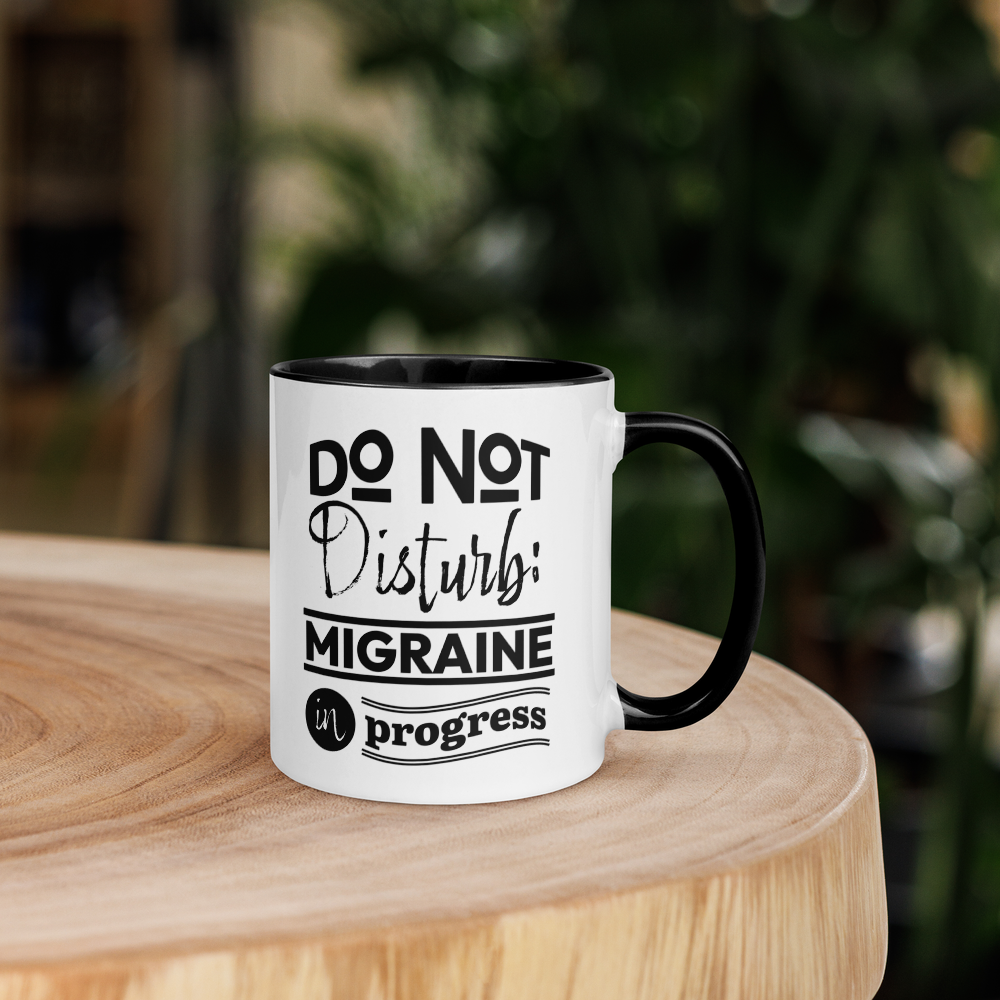
"Do Not Disturb" Migraine Mug
Shop nowDesigned by The Migraine Network 💜
Communicate your needs when you can. I know this is hard. But a quiet conversation with a coworker, a heads up to close friends, or requesting fragrance free spaces at events can meaningfully reduce your exposure. You don't have to justify the full neuroscience. Strong scents trigger my migraine attacks is enough.
Ventilate when you clean at home. Even fragrance free cleaning products can have fumes. Opening windows and stepping out of the room for a few minutes after cleaning makes a real difference.
Use sudden smell sensitivity as a cup check cue. If smells feel sharper than usual, treat it as a signal. When did you last eat? How was your sleep? How full is your cup right now? Responding early, water, a snack, reducing other load, can sometimes prevent a full attack.
Use It as an Early Warning Signal
One of the most useful shifts I've made is treating smell sensitivity as information rather than just a problem.
For many people, a sudden spike in smell sensitivity is one of the earliest signs that a migraine attack is beginning, sometimes hours before any pain arrives. If you start noticing this pattern in your own attacks, you can use it. Act early. Reduce load. Take any early intervention medication if that's part of your plan.
Your brain is sending you a signal. Learning to receive it instead of dismissing it can genuinely change how attacks unfold.
What I Want You to Take Away
Smell sensitivity is a real, documented part of living with migraine, one that shapes daily decisions, limits access to ordinary spaces, and often goes completely unacknowledged, by the people around you and sometimes by healthcare providers too.
You are allowed to ask for fragrance free spaces. You are allowed to leave a room. You are allowed to name what's happening without spending ten minutes justifying it first.
Your brain is not broken. It is more reactive. And that deserves to be met with understanding, especially from yourself.
This article is for educational purposes only and is not medical advice. It is not a substitute for professional diagnosis or treatment. Always talk with a qualified healthcare provider before making changes to your care, medications, or supplements.
Written by Deena Migliazzo
Migraine advocate, educator, and founder of The Migraine Network. Living with chronic migraine and dedicated to building community, education, and resources for others who get it.
Learn more about Deena