

For a long time, I thought I was doing something wrong.
I kept a trigger list. I avoided the foods on it. I said no to things I wanted because I was afraid of setting off an attack. I tracked everything, watched everything, avoided everything I could, and the attacks kept coming anyway.
It wasn't until I understood what migraine actually is, not a trigger problem, but a threshold problem, that everything started making sense.
This blog is about that shift. Why tracking triggers alone isn't enough, what threshold actually means, and how a framework called SEEDS can help you raise it in a way that's realistic for a sensitive nervous system.
Migraine as a Threshold Disease
Migraine attacks are rarely caused by one single trigger. Most of the time, attacks happen when multiple triggers stack together, overwhelming the nervous system and pushing the brain past its threshold.
Some triggers carry more weight than others. Certain things can cause an immediate attack for some people. But for most of us, it's rarely just one thing, it's the combination.
Think of it this way. You have a glass of wine on a Tuesday after good sleep, regular meals, and low stress. Nothing happens. The following Friday, you have the same glass of wine after poor sleep, a skipped lunch, and a stressful afternoon. Attack that evening.
The wine didn't change. Your threshold did.
Cup Theory
The most helpful way I've ever heard this explained is through cup theory.
Think of your cup as your nervous system's capacity to tolerate triggers before an attack begins. When you wake up in the morning, your cup starts relatively empty. Throughout the day, triggers add water.
Imagine this kind of day: you wake up late, skip breakfast, have a stressful commute, miss lunch, sit under fluorescent lights all afternoon, and your menstrual cycle starts. Each of those adds water to your cup. When the cup overflows, threshold reached, a migraine attack begins.
This is why migraine management isn't really about avoiding triggers. It's about keeping the cup from overflowing.
Why Trigger Tracking Often Feels Impossible
Here's something I believe firmly: identifying triggers when your cup is already full is nearly impossible.
If your cup is full every day, you're already in an attack or on the edge of one. At that point, tracking only tells you what pushed you from bad to terrible, not what's actually contributing to your baseline threshold.
This is why trigger tracking feels random and defeating for so many people. It often is, not because you're doing it wrong, but because the focus is on the wrong thing.
The goal of tracking is to understand patterns over time, reduce baseline stress on the nervous system, and raise your threshold so your brain can tolerate more before tipping over.
What It Actually Means to Raise Your Threshold
Raising your threshold means increasing how much your nervous system can handle before an attack starts.
Migraine brains love routine and predictability, which is ironic, because the disease itself is anything but predictable. You can do everything right and still have attacks.
Raising your threshold is about support, building a more stable baseline so your cup starts each day with more space.
One of the most commonly used frameworks in headache medicine for doing this is SEEDS.
SEEDS: The Foundation of Migraine Threshold
SEEDS stands for Sleep, Eat, Exercise, Diary, and Stress. It's the framework used in headache medicine to describe the lifestyle foundations that most directly influence migraine threshold.
You may have heard of it before. What you probably haven't heard is what it actually looks like to implement when your nervous system is already strained.
Sleep: The Biggest Threshold Raiser
Sleep is, in my experience and in the research, the single most powerful lever for raising migraine threshold. It helps regulate neurotransmitter balance, pain processing, hormones, and inflammation. When sleep is inconsistent, too little, too much, or irregular in timing, the nervous system becomes more sensitive, lowering threshold.
Here's the thing most people miss: for migraine brains, consistency is often more protective than total hours. Sleeping in on weekends, even when it feels like recovery, can lower threshold by disrupting the schedule your brain depends on.
From our shop
Migraine Definition Sweatshirt
Shop nowDesigned by The Migraine Network 💜
Common sleep related threshold lowerers: too little sleep, too much sleep, inconsistent schedules, poor sleep quality, changes in routine during travel or weekends.
What helps: aiming for the same bedtime and wake time daily (within 30 to 60 minutes), focusing on sleep quality rather than just hours, building predictable wind down routines, and protecting sleep during higher risk periods like illness or hormonal shifts.
Eat: Steady Fuel for a Sensitive Brain
The migraine brain is highly sensitive to energy changes. Skipping or delaying meals can quickly lower threshold by increasing stress hormones and triggering blood sugar drops that the nervous system reads as a threat.
Regular eating supports stable blood sugar, neurotransmitter function, and overall nervous system regulation.
The most common food related threshold lowerers aren't specific foods, they're patterns. Skipping meals. Long gaps between eating. Letting yourself get to the point of feeling depleted. Dehydration also plays a role here, hydration affects blood flow, circulation, and pain sensitivity, and even mild dehydration can stack with other triggers to lower threshold.
What helps: eating regularly even on low appetite days, avoiding long fasting windows unless medically guided, and staying consistently hydrated throughout the day.
Exercise: Building Tolerance, Not Pushing Limits
Exercise is one of the most confusing parts of migraine management because it can feel like a trigger at first and become protective later. The difference isn't willpower, it's how and when movement is introduced in relation to your current threshold.
When movement is introduced thoughtfully and built gradually, it can strengthen the body's ability to tolerate stress, improve sleep quality, reduce baseline muscle tension, and increase nervous system resilience over time.
The key word is gradually. I write about this in detail in my blog on exercise and migraine, including the exact approach I used to start from two minutes on a treadmill. If exercise has been triggering attacks for you, start there.
Diary: Tracking Patterns Over Time
A migraine diary is one of the most underutilized tools in migraine management, and one of the most important. Keeping a diary isn't about obsessing over every possible trigger. It's about collecting the kind of data that makes patterns visible over time.
Most people start tracking when they're already in a bad stretch, which means the data reflects a cup that's already overflowing. That's not very useful for identifying what's actually contributing to your baseline. The more helpful approach is to track consistently, even on good days, because the good days tell you just as much about your threshold as the bad ones do.
From our shop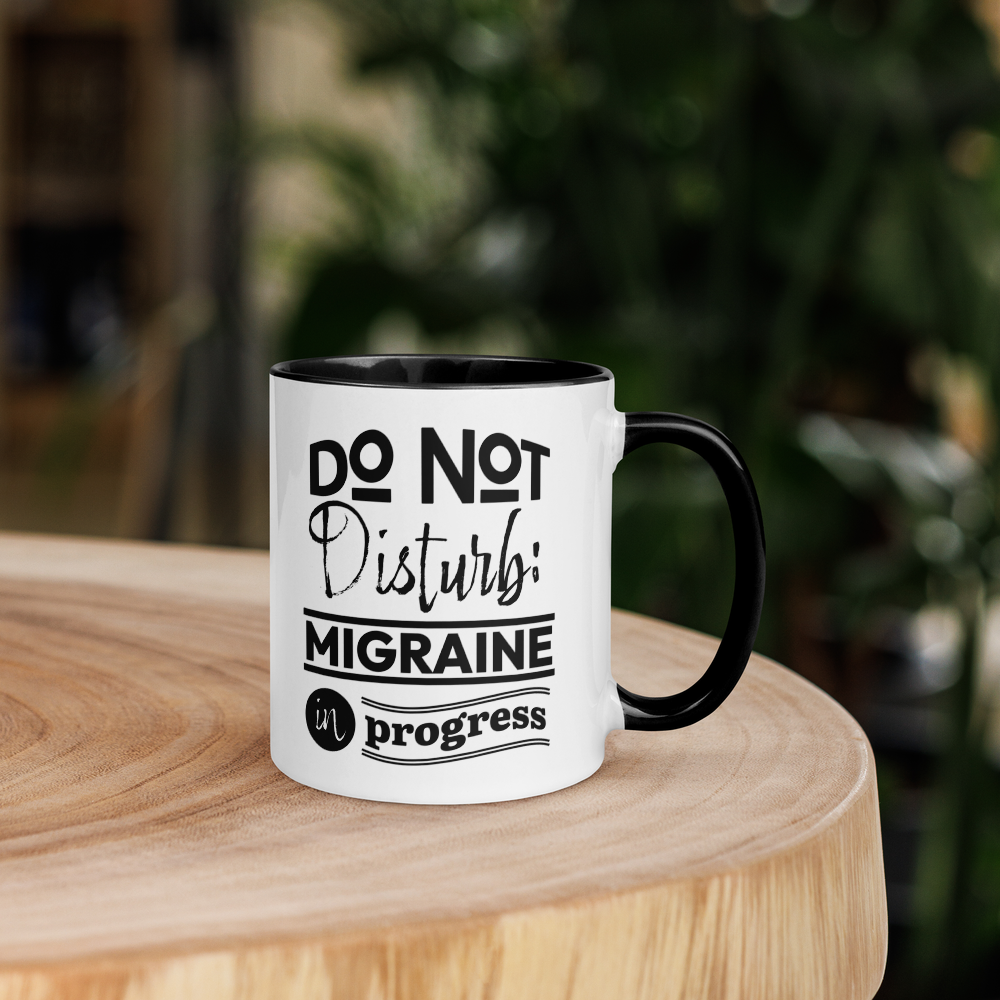
"Do Not Disturb" Migraine Mug
Shop nowDesigned by The Migraine Network 💜
What to track: sleep timing and quality, meal and hydration patterns, stress levels, movement, menstrual cycle if relevant, and attack details like timing, severity, duration, and any early warning symptoms. Over time, patterns emerge that are nearly impossible to see in the moment.
A diary also becomes essential for doctor appointments. Having objective data, average monthly migraine days, functional impact, patterns around hormonal shifts, gives your provider something concrete to work with and strengthens the case for treatment changes or insurance approvals.
The goal is to understand your nervous system's patterns well enough to support it more effectively.
Stress: Reducing Load, Not Eliminating Life
Stress is one of the most significant and most misunderstood factors in migraine threshold. The nervous system can handle stress, it's designed to. What lowers threshold is when stress doesn't have a chance to recover.
When the nervous system stays in a heightened, activated state without coming back down, it continues filling the cup even when nothing else seems to be going wrong. This is also why many people get attacks during or right after lower stress periods, the nervous system finally had room to release what had been building.
Effective stress management for migraine isn't about eliminating stress. It's about creating regular opportunities for the nervous system to reset. What that looks like varies enormously by person.
From Understanding to Actually Doing It
Understanding the framework is one thing. Knowing how to implement it, in what order, at what pace, in a way your nervous system can actually handle, is something else entirely.
If you're ready to move from understanding threshold to actually building it, I put together a step by step guide called The Migraine Guide: 6 Steps to Fewer Attacks. It walks through each SEEDS pillar with practical action steps, real examples, and a layered approach designed for a sensitive nervous system.
Closing Thoughts
Migraine isn't a failure of willpower or discipline. You can do everything right and still have attacks, and that doesn't mean you did something wrong. Raising your threshold isn't about control or perfection. It's about support, consistency, and learning what your nervous system needs to function with a little more room.
When you shift your focus from chasing triggers to supporting your baseline, things start to make sense. Patterns become clearer. Self blame softens. And even when migraine attacks show up, it feels less confusing and less personal.
You're learning how to support a brain that simply needs more care and that understanding, on its own, can be a powerful place to start.
This article is for educational purposes only and is not medical advice. It is not a substitute for professional diagnosis or treatment. Always talk with a qualified healthcare provider before making changes to your care, medications, or supplements.
Written by Deena Migliazzo
Migraine advocate, educator, and founder of The Migraine Network. Living with chronic migraine and dedicated to building community, education, and resources for others who get it.
Learn more about Deena