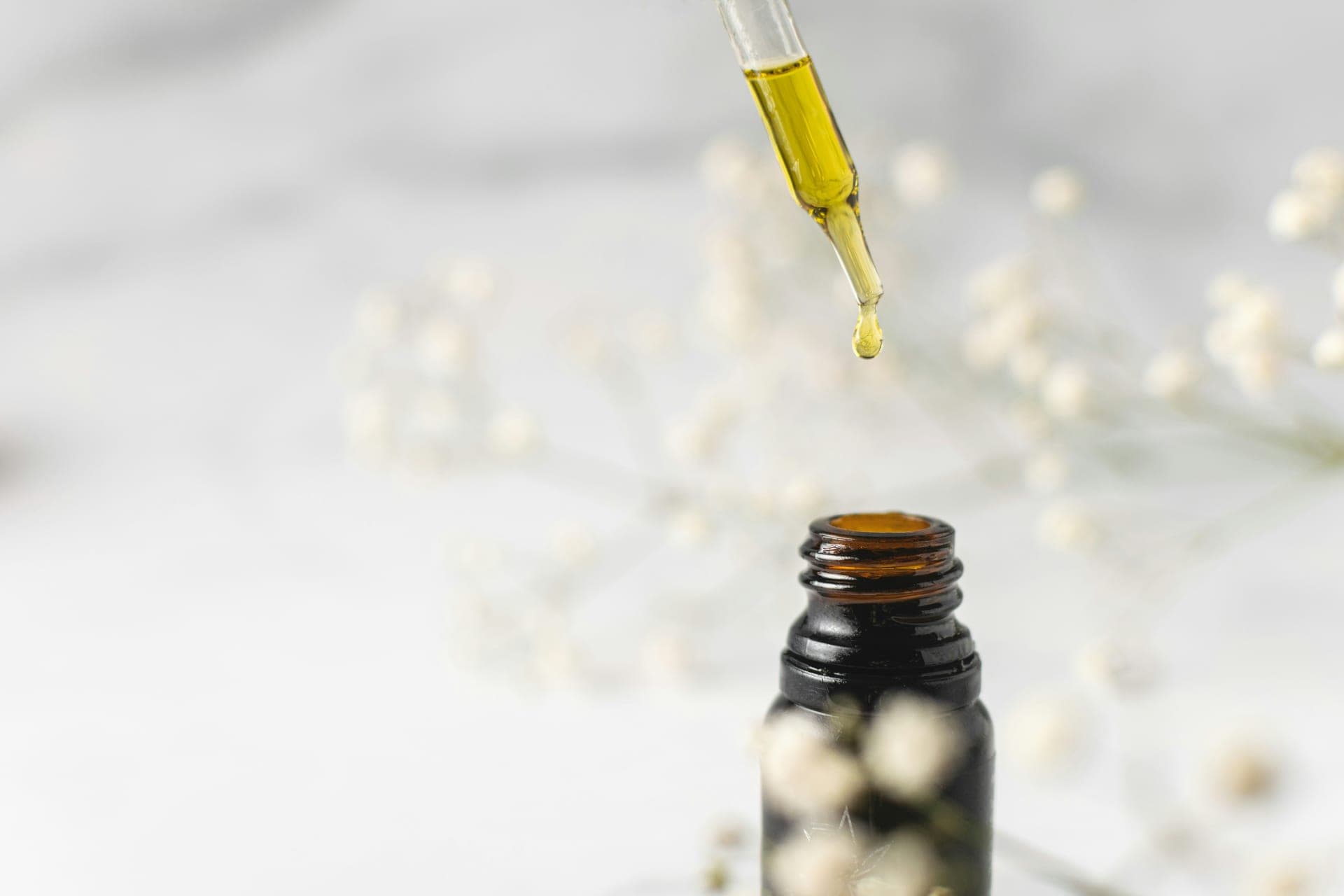
CBD is everywhere right now.
It is in oils, gummies, topicals, drinks, pet treats, lotions at the checkout counter of nearly every store. And the marketing around it has gotten loud. Some companies promise it will fix your pain. Others say it does nothing at all.
Living with chronic pain, including migraine, you have probably heard about CBD from a friend, a family member, or someone in a comment section who swears it changed their life. You have also probably heard someone tell you it is a scam.
The truth, as usual, lives somewhere in the middle.
I wanted to write about this because I get asked about CBD constantly, and the conversation deserves more than a yes or no answer. So let's talk about what the research actually shows, where it falls short, and what we still do not know.
What CBD Actually Is
CBD stands for cannabidiol. It is one of more than a hundred compounds found in the cannabis plant.
The most important thing to understand is that CBD is not the same as THC. THC, or tetrahydrocannabinol, is the compound responsible for the high associated with cannabis. CBD does not produce that effect.
CBD is being studied for its potential role in pain, inflammation, sleep, anxiety, and nervous system regulation. It is not a cure for any of these things. But the way it interacts with the body is genuinely interesting, and worth understanding before you decide whether it is something you want to explore.
Your Body Already Has a System Built for This
This part fascinates me every time I think about it.
Your body has something called the endocannabinoid system, often shortened to ECS. It is a network of receptors, signaling molecules, and enzymes that helps regulate things like pain perception, inflammation, stress response, sleep, and immune function. It is one of the body's master regulators of balance.
You make your own endocannabinoids. These are compounds your body produces naturally to keep all of these systems running. The ECS is something CBD interacts with.
This is part of why cannabinoids have drawn so much research interest. The system they act on is already there, already working, already involved in the very processes that go wrong in chronic pain.
How CBD May Work in the Body
This is where I want to be careful, because the science here is still evolving.
Unlike THC, CBD does not bind directly to the main cannabinoid receptors in the brain and body. Instead, researchers believe it works in a more indirect way. One leading theory is that CBD slows the breakdown of your body's own naturally produced endocannabinoids, allowing them to stay active longer and continue doing the regulatory work they were already doing.
CBD also appears to interact with other receptors involved in pain signaling, inflammation, and serotonin regulation. The full mechanism is still being mapped.
The takeaway is this: CBD does not work like an opioid, which binds directly to pain receptors and blocks pain signals at the source. It works more like a modulator, gently nudging systems that are already active. That is part of why its effects are often described as subtle rather than dramatic.
What the Research Suggests
Here is where honesty matters.
Research suggests CBD may help with certain types of chronic pain, particularly:
Neuropathic pain, which is pain caused by nerve damage or dysfunction.
Inflammatory pain, which is pain associated with conditions that have an immune or inflammation component.
Sleep disruption that often comes with chronic pain.
Anxiety that frequently accompanies long term pain conditions.
But the picture is messier than the marketing makes it sound. Most research on CBD alone has been done with small sample sizes, short study durations, or animal models. A systematic review published in 2023 found that while CBD shows promise, the evidence base is still limited and the existing studies are difficult to compare because of differences in dosing, formulation, and study design.
So the early signals are interesting, but not yet conclusive.
Where the Evidence Is Strongest
The clearest clinical evidence for cannabinoids in pain management is for combination products that contain both THC and CBD.
Sponsored
Migraine Awareness Cap
Shop the gearAds keep The Migraine Network free 💜
According to a 2024 update of a living systematic review on cannabis based products for chronic pain, oral sprays containing comparable ratios of THC and CBD show evidence of small improvements in pain and function for patients with chronic, mainly neuropathic, pain. This evidence is strongest for things like multiple sclerosis related pain, cancer related pain, and nerve injury pain.
For CBD on its own, the research is more limited and the results are mixed. A large 2025 randomized controlled trial published in the Annals of the Rheumatic Diseases tested 50 mg of CBD daily against placebo in 200 patients with fibromyalgia. After 24 weeks, CBD was not superior to placebo for reducing pain. The placebo group actually showed slightly more improvement.
That means the answer depends heavily on the type of pain, the dose, the formulation, and the individual.
What About Migraine?
This is the question I get most often, so I want to give it real attention.
Preclinical research suggests cannabinoids may interact with several pathways involved in migraine, including trigeminal pain signaling, CGRP release (a protein central to migraine attacks and the target of newer migraine medications), and central nervous system sensitization.
There is also a theory called clinical endocannabinoid deficiency, which proposes that some people may have lower than typical endocannabinoid activity, and that this could play a role in conditions like migraine, fibromyalgia, and IBS. This is still a theory, not settled science.
A 2024 review of cannabis and cannabinoid therapies for migraine concluded that while preliminary studies show evidence for the use of cannabinoids in migraine management, larger and more rigorous randomized controlled trials are still needed before these can be considered established treatments.
Recent clinical trial data is starting to fill in some of the gaps. A randomized, double blind, placebo controlled crossover trial first presented in 2024 and published in Headache in 2026 found that vaporized cannabis containing both THC and CBD was superior to placebo for acute migraine pain relief at two hours, with sustained benefits at 24 and 48 hours.
The migraine and cannabinoid space is active and evolving, but it is not yet a space with definitive answers.
What We Still Do Not Know
I want to be transparent about the gaps, because they matter.
Optimal dosing has not been established for most pain conditions. What works for one person may be too low or too high for another. There is no standard prescription level guidance for over the counter CBD.
Sponsored
Headache Hat (wearable ice wrap)
Shop on AmazonAds keep The Migraine Network free 💜
As an Amazon Associate, The Migraine Network earns from qualifying purchases.
Route of administration matters. Oils, capsules, edibles, and topicals are all absorbed differently. They reach the bloodstream at different rates and at different concentrations. A topical for joint pain works very differently than an oil placed under the tongue.
Product quality varies enormously. Over the counter CBD is not regulated like prescription medication. A 2022 study analyzing 80 commercially available CBD products found that nearly half were not properly labeled, containing either significantly more or significantly less CBD than the package claimed. More recent analyses of CBD gummy products have found similar issues, with many containing concentrations that did not match their labels and some containing trace amounts of THC.
There are real drug interactions to be aware of. CBD is metabolized by the same liver enzymes (cytochrome P450) that break down a large portion of prescription medications. This means CBD can affect how your body processes other drugs, including certain antidepressants, blood thinners, anti seizure medications, and some pain medications. This is not a small detail. It is one of the most important reasons to talk to a knowledgeable provider before adding CBD to your routine.
Long term safety data is still limited. Most studies have been short term. We do not yet have a clear picture of what daily CBD use looks like over years.
How CBD Might Fit into a Bigger Pain Management Picture
If you are considering CBD as part of your migraine or chronic pain strategy, here is what I would gently keep in mind.
CBD works best as one piece of a larger framework. Pain management is rarely about one intervention. It is about supporting the nervous system from many angles, sleep, stress regulation, hydration, nutrition, movement, medication when needed, and yes, sometimes complementary tools that may help.
If you want a structured place to start, my guide The 6 Steps I Used to Raise My Migraine Threshold walks through what that bigger picture looks like in practice.
If you want to try it, talk to your provider first. Especially if you take other medications. The drug interaction risk is real and worth taking seriously.
Choose products from companies that provide third party lab testing. This is one of the only ways, in an unregulated market, to have any confidence about what you are actually buying.
The Honest Bottom Line
Research is early, mixed, and often conducted on small samples or animal models. The clearest clinical evidence is for THC and CBD combination products, not CBD alone.
But the biology is real. The endocannabinoid system exists. It plays a meaningful role in how your body processes pain, inflammation, and stress. The reason CBD has drawn so much research attention is because it interacts with a system that is already deeply involved in chronic pain conditions.
Whether it helps you specifically is a question only you, your body, and your healthcare team can answer.
This article is for educational purposes only and is not medical advice. It is not a substitute for professional diagnosis or treatment. Always talk with a qualified healthcare provider before making changes to your care, medications, or supplements.
Written by Deena Migliazzo
Migraine advocate, educator, and founder of The Migraine Network. Living with chronic migraine and dedicated to building community, education, and resources for others who get it.
Learn more about Deena