Loading...
Back to Resources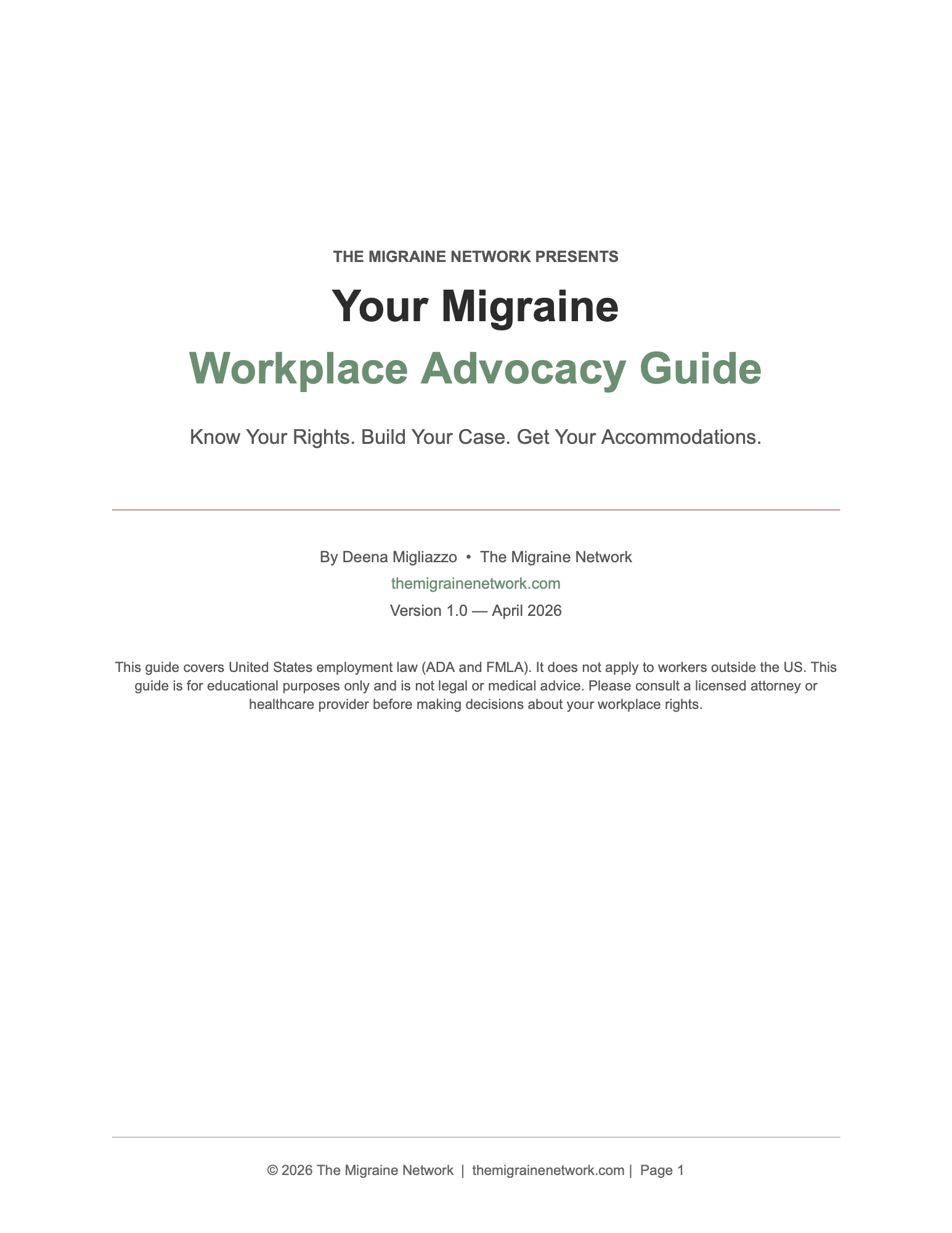
Digital Download
US Workplace Advocacy Guide
Free
Migraine is recognized as a disability under the Americans with Disabilities Act (ADA) when it substantially limits a major life activity. That means US employers are legally required to engage in an interactive process to explore reasonable accommodations, but most people never know to ask, and most requests fall apart in the conversation. This guide gives you a step-by-step system for the whole process: deciding what to share, building documentation, preparing your case, running the meeting, and following through. It covers your rights under the ADA and FMLA, includes ready-to-use email templates, a pattern log workbook, a doctor's-note guide, and accommodation examples for every kind of work environment.
What's Inside
A complete workplace advocacy system, not a summary. You get a legal foundation, a 5-step process, and seven appendices of workbooks and templates you can use tomorrow.
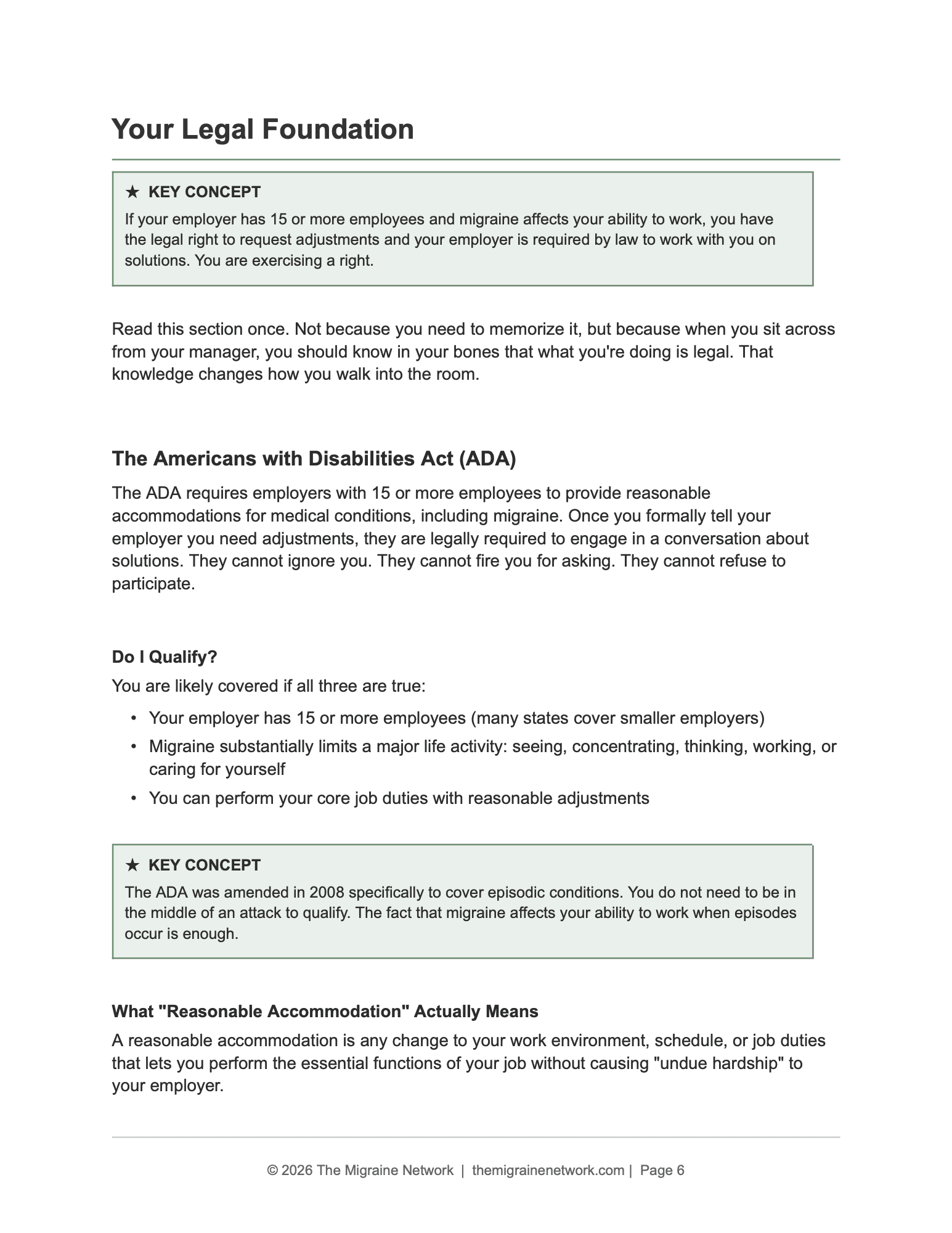
- Your Legal Foundation, the ADA, FMLA, and state protections in plain English
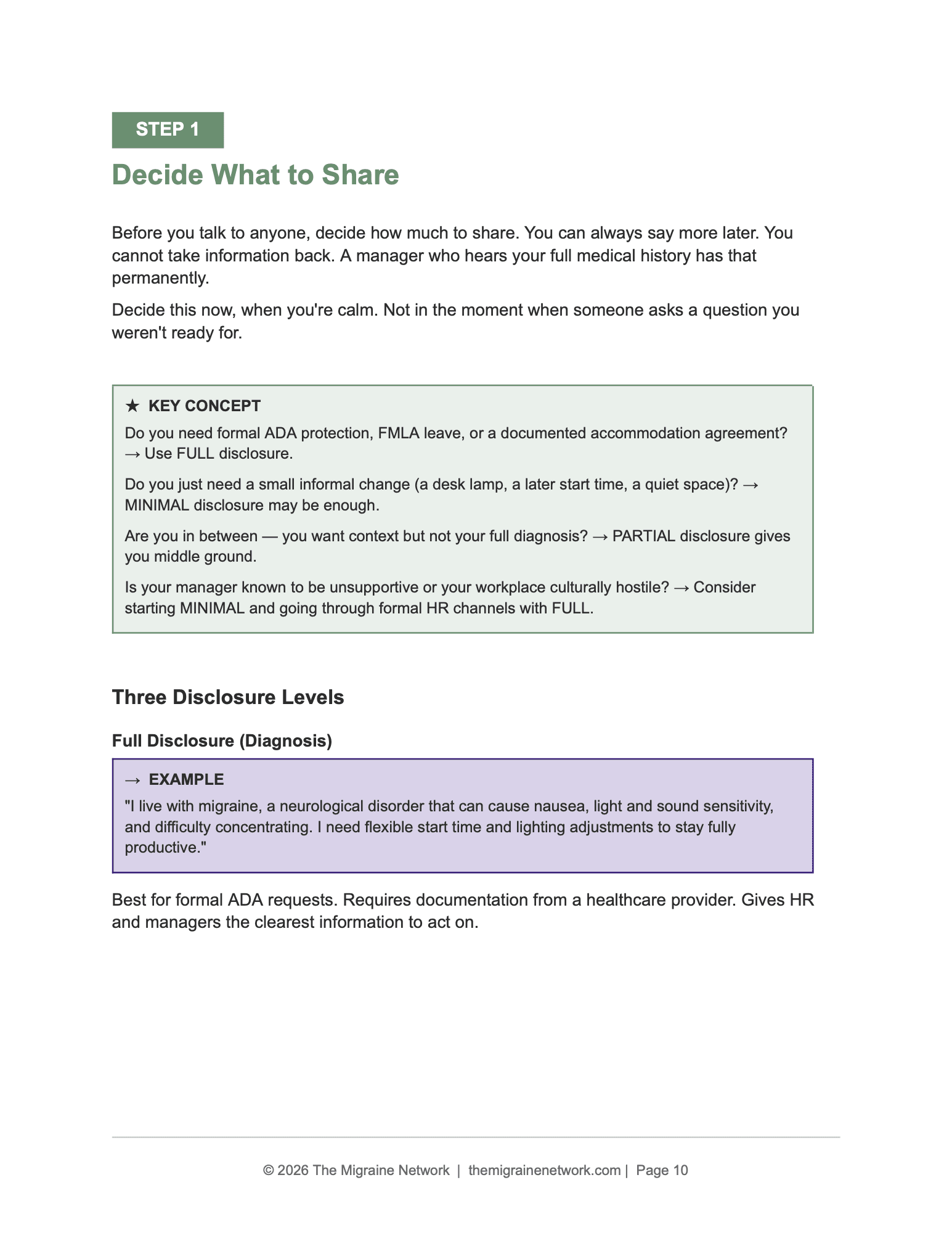
- Step 1: Decide What to Share, what you're required to disclose vs. what you can keep private
- Step 2: Build Your Documentation, pattern log, doctor's note, and evidence that holds up
- Step 3: Prepare Your Case, how to frame the ask so HR says yes
- Step 4: Have the Conversation, scripts for HR, your manager, and your doctor
- Step 5: Follow Through, what to do after the meeting, and if your request is denied
- FAQ, answers to the biggest fears (retaliation, disclosure, job security, backlash)
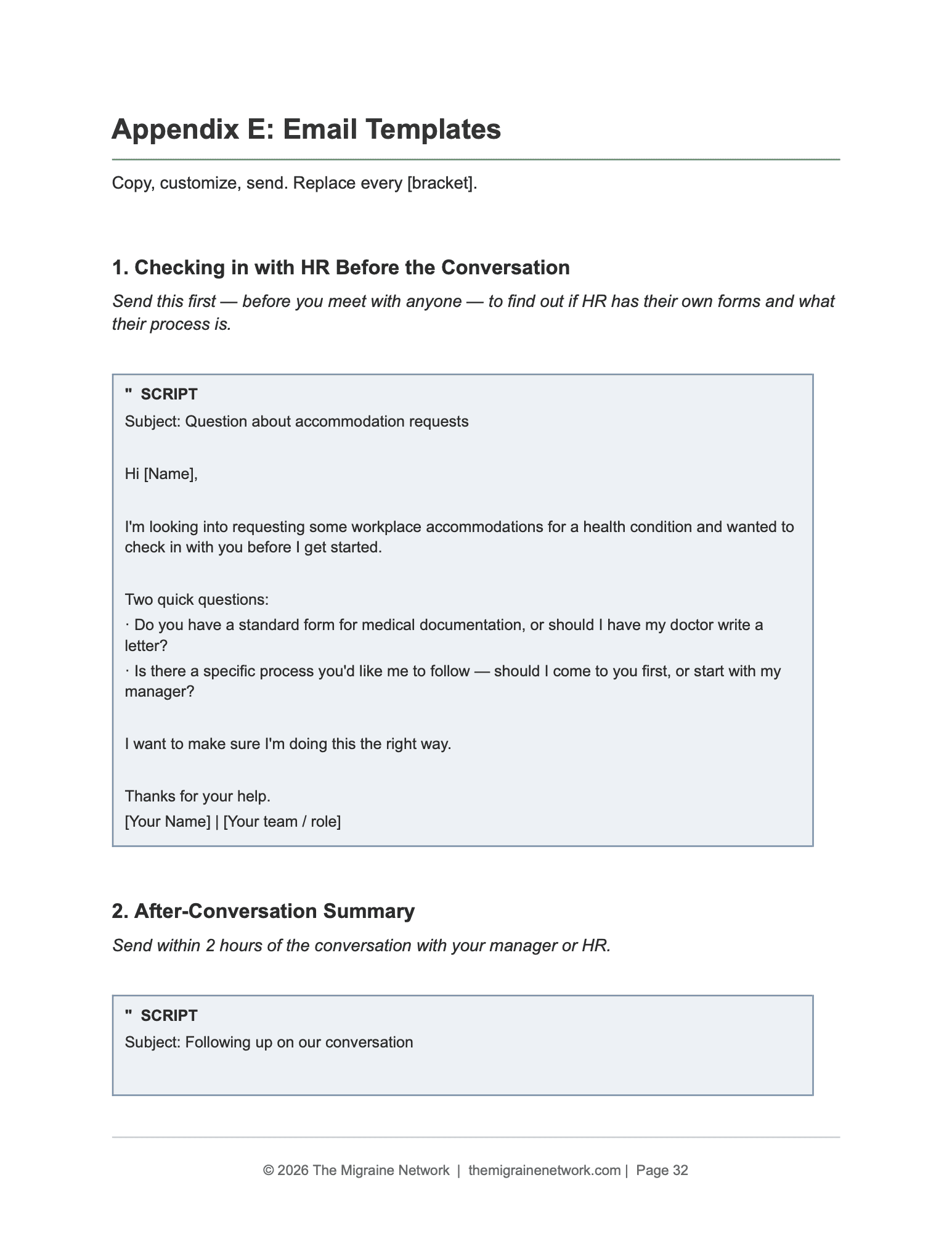
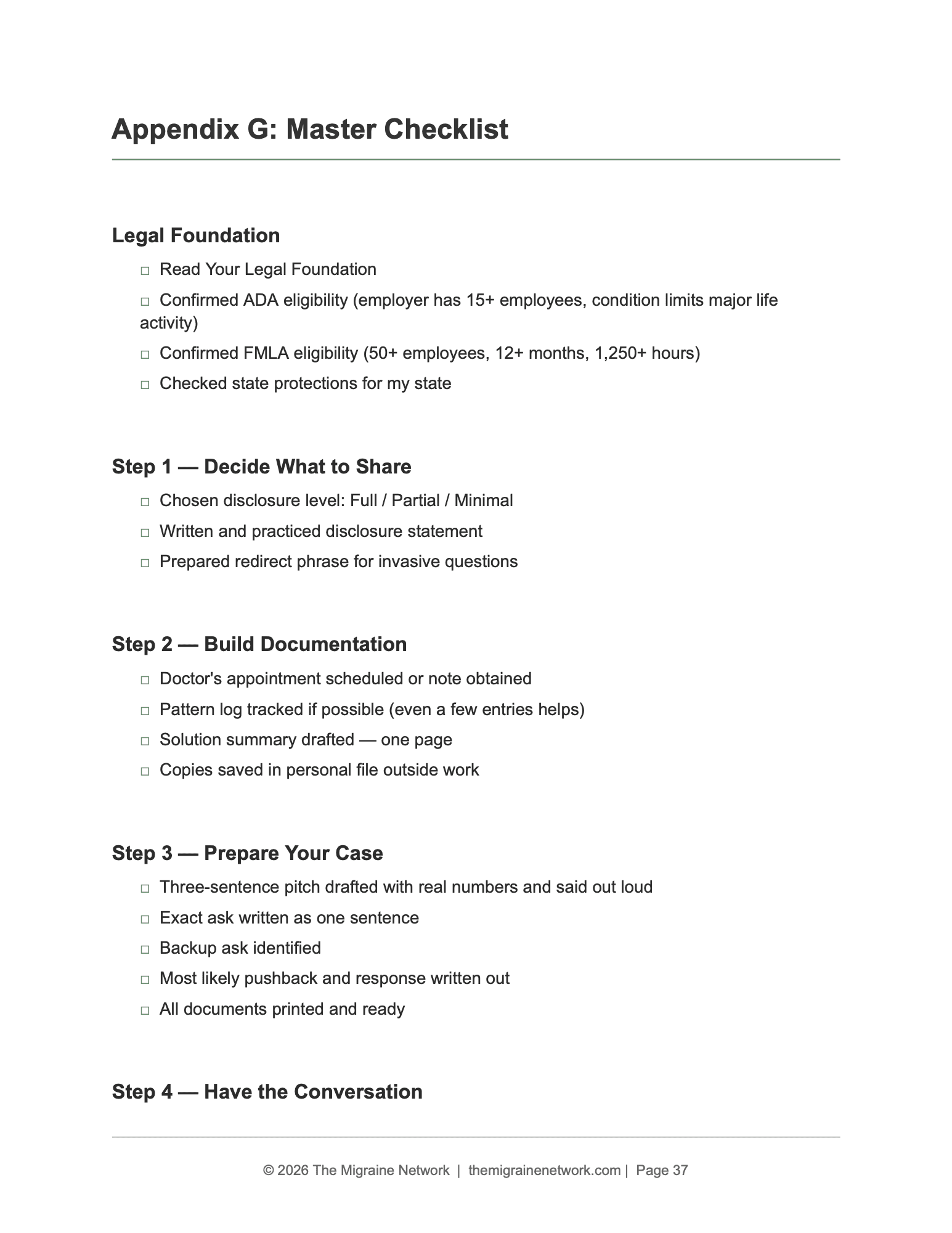
- Seven appendices: glossary, doctor's note guidance, solution summary example, pattern log workbook, email templates, accommodation examples by work environment, and a master checklist
Who Is This For?
Anyone working in the US who lives with migraine and feels stuck between pushing through attacks and losing their job.
- You've been hiding migraine at work and want to stop
- You need accommodations but don't know how to ask
- Your manager is pushing back on sick time or flexibility
- You're new to the workforce and want to set things up right
- You've been denied accommodations and don't know what to do next
- You want to understand your rights before you need to use them
Why This Guide
Most migraine warriors don't know that federal law is on their side, and the ones who do still freeze in the HR meeting. This guide gives you the vocabulary, the paper trail, and the scripts to advocate for yourself without needing a lawyer, an HR background, or a week of research. Read it once, work through the appendices at your own pace, and keep it on your desktop for every conversation that follows.
Or
Instant PDF, emailed to you for keeps
Peek Inside
A few sample pages from the guide.
1 / 4
Frequently Asked Questions
Yes. Chronic migraine is recognized as a disability under the Americans with Disabilities Act when it substantially limits one or more major life activities, which it very often does. This guide explains how to document that and request accommodations.
Not necessarily. You only need to share enough medical information to support your accommodation request, not your full medical history. The guide walks you through exactly what you're required to disclose and what you can keep private.
No. This guide is educational and based on public information about the ADA and FMLA. It is not legal advice and does not replace consultation with an employment attorney. For complex situations, like denied accommodations, retaliation, or termination, please consult a licensed attorney in your state.
The guide is delivered as an instant PDF download after checkout. Print it, save it to your phone, or keep it on your desktop for reference whenever you need it.
This guide is specifically written for US workers and focuses on US federal law (ADA and FMLA). Workplace disability protections vary by country. If you're outside the US, the general framing may still be useful, but the legal specifics will not apply.
You don't have to pay anything to take this guide, it's yours. If it helped and you're in a place to chip in, that's what keeps it free for the next person. No minimum, no tiers, no version hiding behind a price.
Living with migraine is hard enough without a paywall in the way. I built The Migraine Network to be the resource I wish I'd had, accessible to anyone, regardless of what they can spend. It's a for-profit LLC, so anything you pay isn't tax-deductible, but every dollar goes back into keeping these guides free and creating more for the people coming in after you.
You Might Also Like
Hand-picked companions for this resource.