

For years I thought sleep was one factor among many.
Eat well, manage stress, track triggers, get enough sleep. It all felt equally important, equally worth monitoring, equally worth feeling guilty about when I got it wrong.
It took me a long time to understand that sleep is not just one item on the list. It is the foundation everything else builds on. When sleep is unstable, every other pillar becomes harder to maintain. When sleep is consistent, your brain has more room to handle everything else the day throws at it.
This is not generic wellness advice. There is a specific reason the migraine brain responds to sleep disruption the way it does, and understanding it changed how I approach this entirely.
Why the Migraine Brain Is So Sensitive to Sleep Changes
Migraine is a neurological disease. The brain of someone with migraine is wired to be hypersensitive to change, to light, sound, stress, hormonal shifts, and perhaps most significantly, disruptions to routine.
Sleep is one of the most powerful regulators of your nervous system. It influences cortisol levels, inflammation, pain processing, and the overall stability of your brain's electrical activity. For a brain that is already more reactive than average, sleep disruption does not just make you tired. It directly lowers your migraine threshold.
Think about the cup. Every day your nervous system fills with triggers and stressors. When it overflows, an attack begins. A night of poor or inconsistent sleep does not just add a little to the cup. For many people with migraine it starts the day with the cup already significantly full, before a single meal has been skipped or a single stressor has appeared.
This is why sleep sits at the top of the SEEDS framework used in headache medicine. Sleep, Eat, Exercise, Diary, Stress. These five foundations most directly influence migraine threshold, and sleep is listed first for a reason.
The Part Nobody Explains: Consistency Matters More Than Hours
Most sleep advice focuses on quantity. Get seven to nine hours. Go to bed earlier. The migraine conversation needs to focus on something different: consistency.
Your brain runs on a circadian rhythm, an internal clock that regulates hormones, body temperature, and sleep-wake cycles on a roughly 24-hour schedule. When that rhythm is disrupted, even slightly, attack susceptibility increases. That recalibration costs threshold.
For a migraine brain, even a small shift in the sleep-wake schedule can be enough to tip the cup.
This is why the same person can sleep six hours on a Tuesday and feel fine, then sleep nine hours on a Sunday and wake up with an attack. It was not the hours. It was the disruption to the rhythm.
The Weekend Problem
This is the one that surprises people most.
Sleeping in on Saturday sounds harmless. You worked hard all week. You are exhausted. An extra two hours feels earned.
For a migraine brain, that shift in wake time can be enough to trigger an attack. Not because sleep is bad, but because the rhythm shifted. Research consistently shows that attacks peak in the early morning hours, often between 4am and 9am, a timing that connects directly to how your circadian rhythm interacts with your sleep-wake cycle. Disrupting that cycle by sleeping significantly later shifts when your body expects to wake up, and your nervous system pays the price.
Most headache specialists suggest staying within 30 minutes of your normal wake time, even on weekends, to keep the rhythm stable.
I know how that sounds. I resisted it for a long time. But when I actually committed to it, the difference in my Saturday and Sunday attack frequency was noticeable within a few weeks.
You can still rest. You can still stay in bed. The goal is to keep the wake time consistent, not to deprive yourself of recovery.
The Nap Trap
Naps are complicated for migraine brains.
A short rest, ten to twenty minutes, can help on a high-load day without significantly disrupting your nighttime sleep or circadian rhythm. Many people find this genuinely helpful during prodrome or recovery phases.
A long nap, anything over twenty to thirty minutes, is a different situation. Long naps push you into deeper sleep stages, which makes it harder to fall asleep at your normal time that night. That disrupts the sleep schedule. Which lowers the threshold. Which increases attack risk.
If you are in a bad stretch and rest feels necessary, the goal is to rest without fully falling into deep sleep. Lying down in a dark quiet room with your eyes closed, but setting an alarm for twenty minutes, gives your nervous system a break without creating a new disruption.
On true recovery days after a long attack, this calculus changes. Listen to your body. But on regular days when you are trying to maintain your baseline, the short rest over the long nap is worth protecting.
From our shop
Migraine Definition Sweatshirt
Shop nowDesigned by The Migraine Network 💜
Early Morning Attacks and What They Tell You
If you consistently wake up in the early morning hours already an attack in progress, you are not alone.
Research consistently shows that migraine attacks most commonly begin between 4am and 9am, a window that connects to the later stages of the sleep cycle and the body's sleep-wake transition. For some people, the attack is already underway before they open their eyes, which means the waking is a symptom, not the cause.
This distinction matters because the alternative story, "I woke up at 5am and could not fall back asleep, and that is what caused my migraine," leads to anxiety about sleep, which creates tension around bedtime, which makes it harder to fall asleep, which actually does disrupt the sleep schedule. A cycle that makes things worse.
If you notice this pattern consistently, track it in your diary. It is useful information to bring to your doctor, and understanding it as part of your own attack pattern rather than something to be frightened of can reduce a significant amount of secondary stress.
What Actually Helps
Keep the same wake time every day. This is the single most impactful sleep habit for migraine threshold. More impactful than what you eat before bed, more impactful than your mattress. The anchor of a consistent wake time stabilizes the entire circadian rhythm.
Get morning light exposure. Within thirty minutes of waking, get outside or sit near a bright window. Natural light is the strongest signal your circadian clock receives. It sets the rhythm for the day and supports more consistent sleep timing at night.
Watch caffeine timing. Caffeine has an average half-life of approximately 5 hours, though this varies significantly from person to person, ranging from 3 to 7 hours depending on genetics, medications, and other factors. A coffee at 2pm means roughly half of it is still in your system by 7pm. For a migraine brain sensitive to sleep disruption, caffeine timing is worth paying attention to. This does not mean eliminate it. It means be aware of when you are having it.
Keep the bedroom cool. Your core body temperature drops as you fall asleep. A cooler room, generally between 60 and 68 degrees Fahrenheit, supports that process and helps you fall and stay asleep more easily.
Protect the hour before bed. Bright screens, stimulating content, stressful conversations, and high-intensity work in the hour before sleep delay melatonin production and make it harder to fall asleep at a consistent time. This is not about eliminating screens forever. It is about recognizing that what happens in that last hour affects what happens when the lights go out.
Do not skip sleep to catch up on life. This one is harder than it sounds because life with migraine often means falling behind. But consistently sacrificing sleep to catch up on work, chores, or anything else creates a threshold cost that typically outweighs the benefit of what you accomplished.
From our shop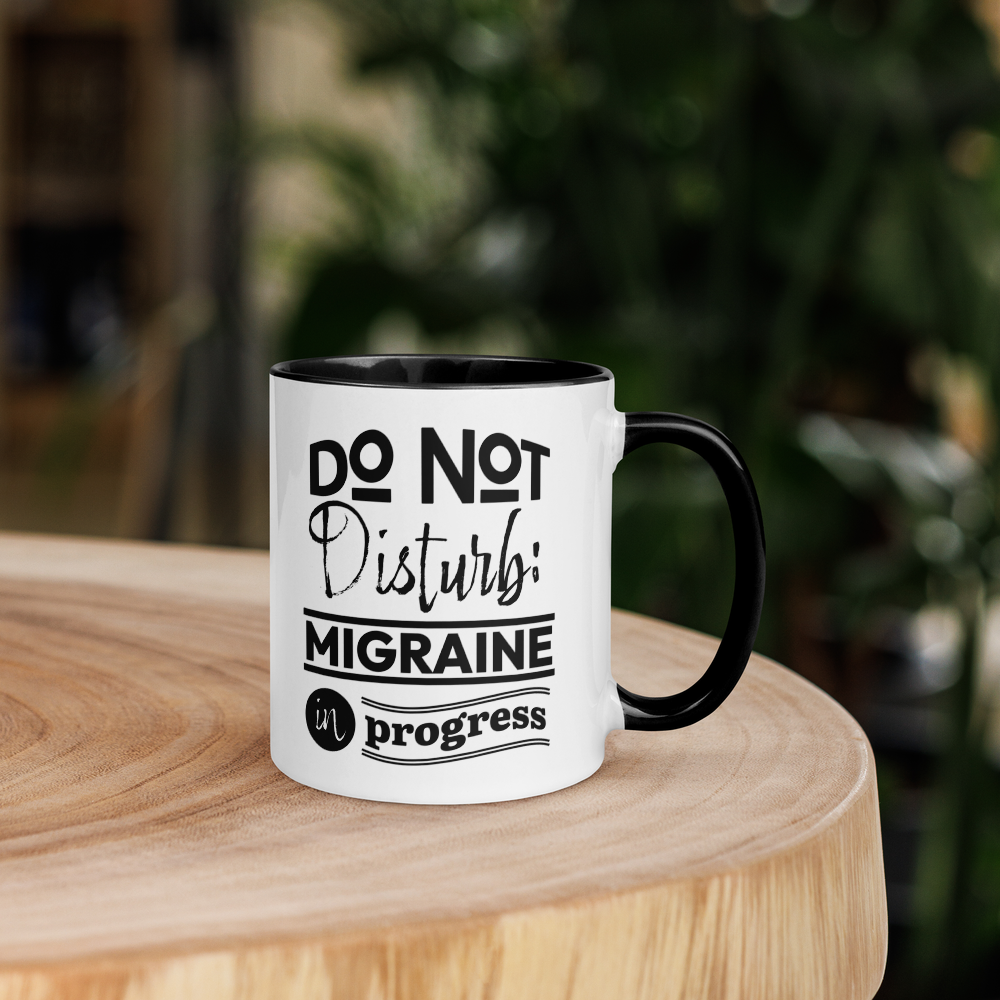
"Do Not Disturb" Migraine Mug
Shop nowDesigned by The Migraine Network 💜
When Sleep Is the Symptom, Not the Cause
This is worth saying clearly: sometimes migraine disrupts sleep, not the other way around.
Prodrome, the pre-attack phase, commonly causes insomnia, hypersomnia, and fragmented sleep. Postdrome, the recovery phase, often involves significant fatigue and disrupted sleep architecture. During an active attack, sleep is often the only relief available but may not come easily.
If your sleep is consistently disrupted and you are also experiencing frequent attacks, research suggests the relationship between migraine and sleep is bidirectional. Both may be symptoms of a threshold that is chronically too low, rather than one simply causing the other.
This is an important conversation to have with your neurologist or headache specialist. There are treatment approaches specifically designed to address sleep disruption as part of migraine management, and if sleep itself has become a cycle of anxiety and disruption, that is worth getting support for.
A Final Thought
Sleep used to feel like another thing to fail at.
I was not getting enough. Or I was getting too much. Or I slept in on Saturday and paid for it Sunday. Or I could not fall asleep before an attack and then blamed myself for the attack.
Understanding why the migraine brain responds to sleep the way it does did not fix everything. But it changed how I related to the problem. Instead of feeling like I was failing at a basic human function, I started understanding what my brain actually needed and why.
Consistency over quantity. Wake time as the anchor. Rest without disruption when you need it. Protection of the rhythm above almost everything else.
Sleep is not just one item on the migraine management list. It is the list's foundation. Everything else you do to raise your threshold becomes harder when sleep is unstable, and more effective when it is not.
If you want to go deeper on the full framework for building a more stable baseline, including all five SEEDS pillars in the order that makes the most difference, I walk through it step by step in The 6 Steps I Used to Raise My Migraine Threshold.
This article is for educational purposes only and is not medical advice. It is not a substitute for professional diagnosis or treatment. Always talk with a qualified healthcare provider before making changes to your care, medications, or supplements.
Written by Deena Migliazzo
Migraine advocate, educator, and founder of The Migraine Network. Living with chronic migraine and dedicated to building community, education, and resources for others who get it.
Learn more about Deena